“The more you love someone, the less he likes you back.”
The Summer Book“The more you love someone, the less he likes you back” is Sophia’s blunt account of loving Moppy, a cat who repeatedly refuses the affection she offers. The expression turns a particular household frustration into a memorable paradox: Sophia gives more, Moppy draws away, and her devotion deepens rather than resolving the distance between them.
The saying and its occasion
Sophia introduces the thought while reflecting on love as something that does not guarantee a response. She calls it funny, then gives the imbalance a compact form: “The more you love someone, the less he likes you back.” Grandmother agrees that the observation is true and asks what follows from it. Sophia’s answer is not retreat or restraint. She says, “You go on loving,” and threatens to love harder and harder. Grandmother sighs and says nothing, leaving the child’s insistence to stand without correction or reassurance.
The exchange establishes the saying as more than a clever complaint. It contains a dilemma: affection is freely given, yet the beloved’s response remains outside the lover’s control. Sophia’s proposed solution intensifies the very behavior that exposes her to rejection. The humorous force of the maxim comes from this contradiction, while its emotional weight comes from how seriously she lives by it.
Moppy’s independence and Sophia’s pursuit
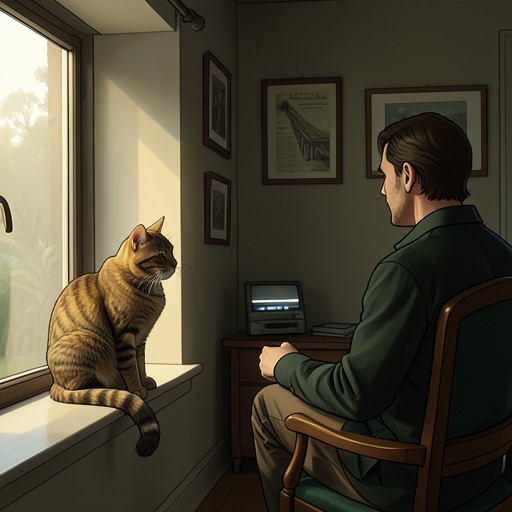
Moppy arrives as a tiny kitten that can drink only from a nipple. The family finds Sophia’s baby bottle in the attic; at first the kitten sleeps in a tea-cosy for warmth, then, once it can walk, in Sophia’s bed on its own pillow beside hers. This early closeness gives way to a different arrangement as Moppy grows. He leaves the cottage for the house and makes his bed beneath the bed, in the box used for dirty dishes. Sophia carries him back and tries to win him over, but he returns to the dish box. His name is Ma Petite, though the family calls him Moppy.
His preferences make the saying concrete. The family takes him to pleasant places a cat might enjoy, but he only glances at them and walks away. He tolerates Sophia’s hugs before climbing back into the box, and when she shares secrets he averts his yellow gaze. Food and sleep seem to matter more to him than her attempts at intimacy. Even his practical effect on the household is perverse: when the dish box fills, he howls until someone washes the dishes. He remains an individual with his own habits, not a companion reshaped by Sophia’s affection.
Sophia nevertheless pursues him week after week. She speaks softly, offers comfort and understanding, and only occasionally loses her patience enough to yell or pull his tail. Moppy hisses and runs under the house when she does; afterward he eats better and sleeps longer, curled up beyond reach. The pattern does not reward Sophia’s efforts with greater closeness. Instead, her attention and his withdrawal recur together, making the maxim sound less like a passing joke than a description of their daily relationship.
When affection becomes distress
The pursuit begins to crowd out Sophia’s play, and she has nightmares. She cannot think about anything but the cat who will not be affectionate. Moppy, meanwhile, grows into a lean, wild little animal. One June night he does not return to his dish box; the next morning he enters the house, stretches, sharpens his claws on the rocking chair, and jumps onto the bed to sleep. His calm superiority sharply contrasts with Sophia’s distress. His return to the room is not a return of affection.
Moppy’s hunting brings the conflict into the family’s mornings. He carries prey into the house to be admired, and the birds are thrown into the sea. Sophia appears at the window to ask whether the body has been taken out, then yells about the blood and how many have been killed. The routine makes morning coffee different from what it had been. When Moppy learns to conceal his kills, the visible mess disappears, but Grandmother discovers a row of small bird skeletons beneath a floorboard. She knows he has continued hunting; when he rubs against her leg, she draws away and calls him “You sly bastard.” His dish remains untouched by the steps, attracting flies.
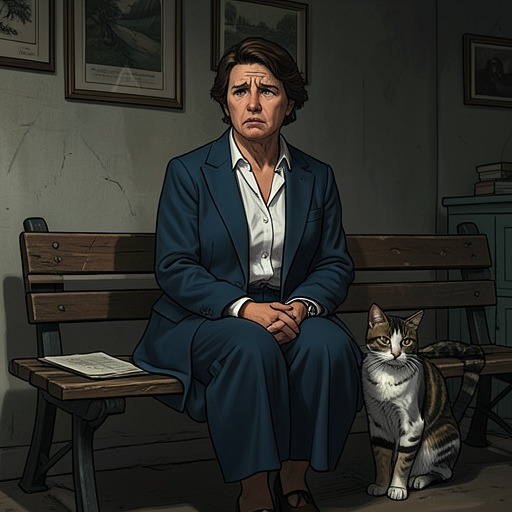
Against this background, Sophia says she wishes Moppy had never been born, or that she had never been born. She and the cat are not speaking, and she cannot see what forgiveness would accomplish if he does not care. The saying’s comic neatness now contains genuine pain: Sophia can imagine rejecting the relationship altogether, but she remains preoccupied with the animal who has not answered her love.
The maxim’s limit
The expression does not promise that persistence will transform Moppy or make him loving. Its most important qualification is in Sophia’s own conduct: she continues to care even when she recognizes the cost and doubts that forgiveness will matter to him. Later, when she cries that she wants Moppy back, Grandmother reminds her how it will be. Sophia accepts that it will be awful, but answers that Moppy is the one she loves; they exchange cats again. The decision gives the maxim a final, practical meaning. Knowing that love brings no assurance of being liked in return does not make Sophia stop choosing the beloved.
The phrase therefore holds two tones at once. It is funny because it states a familiar emotional imbalance with the certainty of a child’s rule; it is painful because the story shows that Sophia’s attachment is not cured by recognizing that imbalance. Moppy’s indifference remains his own, while Sophia’s love persists as her choice. The maxim explains the pattern without resolving it: affection can deepen in the absence of reciprocity, and understanding that fact is not the same as escaping its hurt.